Blog 7

This image has an empty alt attribute; its file name is screenshot-2020-01-13-at-12.55.20.png

As autumn approaches, so does the busiest time of year for our department, which is Orientation for all of our students. Student Orientation is extremely important to enable students to understand what the upcoming year/years have in store for them. This is the time where they will take in so much information and therefore it is important to keep this information as succinct and interesting as possible. As well as our students being immersed into a new university they will also be immersed into a new culture and therefore this is an extremely important time for them to gain the information they will need for a successful year at Northeastern University.

Our NU Immerse orientation lasts 1 week and takes a lot of planning for months in advance. I have noticed a huge effort and collaboration not just interdepartmentally but also with many other campus partners throughout the university. Since starting my placement, this is the first time I have realized the vast scale of Northeastern University and how many small moving parts it takes to execute an orientation. This includes the on and off campus partners such as the NUPD, Health services, Bank of America and Title IX.

Through student orientation, we aim to tackle some of the issues stated by Mallinckrodt and Leong below by including many campus partners in different sessions. “Mallinckrodt and Leong (1992) noted that many international students experienced significant problems in adjusting to life in the United States, including difficulty with English language proficiency, insufficient financial resources, social integration, and problems in daily life tasks, homesickness, and role conflicts” (Millinckrodt & Leong, 1992).

Throughout orientation, there are many opportunities for social interaction between students including different group work situations and sharing fun activities such as tours of Boston, field trips and eating out. We aim to target one problem in particular mentioned by Mallinckrodt and Leong which Is “problems in daily life tasks”. We include a session where our GSA’s preform a skit show explaining common cultural differences in everyday life such as tipping in a restaurant or common everyday interactions with people and professors. This session is extremely important and focuses on the fun aspect of getting socially adjusted whist being informational at the same time.

 Throughout orientation my role changed almost every day according to circumstances. This was a great oppertunity to achive/ improve on the IP objectives. In particular objective 2 (see appendix 1) and objective 7 (see appendix 1). Through being able to quickly adapt at orientation to challanging situations or absent staff I was able to develop the ability to receive, quickly comprehend and execute instructions to the employer’s satisfaction as a means to progressing to a more responsible role. Furthermore, being able to communicate with international students all week and lead sessions exploring not only their culture but also American culture which is also a foreign culture to me. 

References 

Millinckrodt, & Leong. (1992). International Graduate Students, Stress and Social Support. Jornal of College Student Development, 71-78.

Appendix 1

Learning objectives

2.Develop the ability to receive, quickly comprehend and execute instructions to the employer’s satisfaction as a means to progressing to a more responsible role;

7. Acquire cultural competence that would enable students to succeed in a cultural environment different from their own and better prepare them for the global borderless market of the future.Open publish panel

Blog 6

This image has an empty alt attribute; its file name is screenshot-2020-01-13-at-12.52.13.png

Fall orientation is one of the most important times for our department as this is when we welcome our upcoming students. Due to this high influx of work and support for the students, Global Student Ambassadors are hired. GSA’s are students who are employed by the department to help with the upcoming cohort of students. The GSA’s have been in the program before and therefore are better equipped to connect with the students on a more personal level to help then through their program.  A peer/ student mentor is defined as “a person who provides guidance, support, and practical advice to a mentee who is close in age and shares common characteristics or experiences (Beltman & Schaeben, 2012Kram, 1983). It is particularly important for our program to have student mentors as all of our upcoming students are international and non-native English speakers, therefore, it is important for them have a continuous support system as they are being immersed into this new culture. 

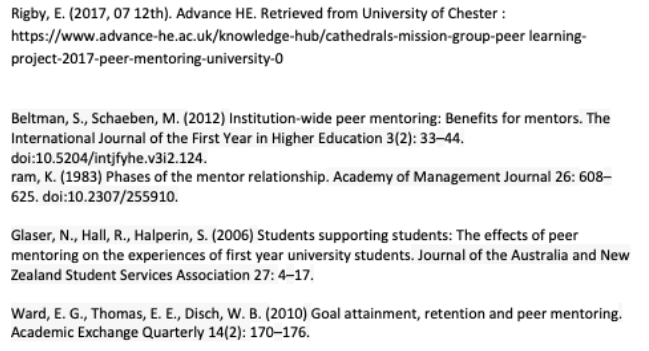
Through observing the GSA’s, I have been able to see the first-hand impact a student mentor can have on new students and the different relationship they have with them compared to with staff.  Through this observation, I have identified a clear link  to the placement objectives number 3. (see Appendix 1). I have been able to gain an understanding of how employing these GSA’s has a huge benefit on our students . Furthermore, I am able to enhance my interpersonal skills to work together with the GSA’s to reach the organisational goal to ensure students have the most positive time they can at Northeastern.  According studies have shown that “university-based peer-mentoring programs, especially during the first year, can help students feel more connected and integrated to the university (Glaser, Hall, & Halperin, 2006), which increases student retention (Ward, Thomas, & Disch, 2010) and their likelihood of graduating” (ACT Incorporated, 2010). Supporting this, according to a study conducted by the University of Chester, seen in Figure 1, having a mentor has helped 87.5% of mentees/ new students settle into university. These results are very positive, and we hope that they will also reflect on our program to assist our students in graduating from the NU Immerse programs.

This image has an empty alt attribute; its file name is screenshot-2020-01-13-at-12.50.29.png
This image has an empty alt attribute; its file name is screenshot-2020-01-13-at-12.50.38.png
This image has an empty alt attribute; its file name is screenshot-2020-01-13-at-12.50.48.png

Blog 5

When given the responsibility of the Nu TOEFL it made me reflect on having only been on the receiving end of an exam, I know the overwhelming emotion that comes with a high stake standardized exam.  The debate of whether high stakes exams are an effective way of assessment. “NASP strongly opposes the use of large-scale testing as the sole determinant for making critical, high stakes decisions about individual students and educational systems, including access to educational opportunity, retention or promotion, graduation or receipt of a diploma” (NASP, 2003, para. 2). As this source from the National Association of School Psychologists states, high stakes exams can determine your future just on one test. This kind of testing does not take into regard outside factors in different individuals life’s such as access to education, economic standing, health issues and many more just as Jones states. “One of the problems with relying solely on test scores to make high-stakes decisions is that it involves making inferences about the quality of teachers, administrators, and schools” (Jones, 2008, P67-68).

In the office I work in there has been a recent change in assessment of the programs we offer. This change consists of getting rid of the high stakes test and introducing a series of smaller assessments that will be collated into a final grade. I am exited to see the impact this will have on the students year in the program without having  the stress of a high stakes exam. I will be doing this by comparing how many people pass the program compared to the number of students who passed last year ( See Figure 1). Further to the previous set of results, I will be writing another blog regarding the new passing rate of the program in the future.

 Understanding how the data is being used and how due to the data trends we were able to evaluate how the NU TOEFL wasnt an effective measure of english language. 

This image has an empty alt attribute; its file name is screenshot-2020-01-13-at-12.45.47.png
Figure 1 (only concentrating on AC (UG) pass rate) Figure 1
This image has an empty alt attribute; its file name is screenshot-2020-01-13-at-12.46.53.png
Figure 1 (only concentrating on AC (UG) pass rate) Figure 1

Bibliography

Jones, B. D. (2008). The Unintened Outcomes of High Stakes Testing . Journal of Applied School Physcology, 67-68.

Kruger, L. J., & Shriberg, D. (2003). High Stakes testing : New Challenges and Opportunities for School Psychology. Rouglage.Open publish panel

Blog 4

This image has an empty alt attribute; its file name is screenshot-2020-01-13-at-12.35.07.png

As part of my responsibilities, I help run the Nu TOEFL exam. TOEFL is a globally recognized Test of English as a foreign language, which, we as a university provide internally to our students as well.  When I first found out about my responsibilities to assist run this exam I felt overwhelmed. However, I knew that this responsibility of mine would help me achieve one of my placement objectives. My goal is to develop my interpersonal skills to work as part of a team to contribute towards the larger organizational objective. This exam is extremely important both internally and externally.  Even being able to be a small part of this process is a huge task.

Having only been on the receiving end of exams I did not realize how much preparation goes into an exam like this. Whether it being ordering the materials, having extra pencils, booking a room and catering for the staff and much more. This process has been a learning curve for me, particularly logistically, having so many different components to organize.

Through taking the GET2 test (see results in figure 1) in my EEE2 module, I discovered that I have a very high need for achievement. This result would explain my need for success in helping run the Nu TOEFL. Reflecting on this test helped me realize what my strengths and weakness are so I can consciously improve them. An example of one of my strengths is a need for achievement and my weakness (see figure 2) is I have a low need for autonomy and therefore can find doing the same work repeatedly very discouraging.  A way I could work on this weakness could be by changing the way I complete autonomous tasks, by introducing different variables such as a change of environment or differentiating the order in which I conduct the task.

This image has an empty alt attribute; its file name is screenshot-2020-01-13-at-12.36.12.png
This image has an empty alt attribute; its file name is screenshot-2020-01-13-at-12.36.21.png

Get2 link

http://get2test.net/Open publish panel

Blog 3

Image result for usa vacation requirements

Now I have settled into the work routine I would like to explore more of America and take a long weekend to go to a surrounding state. However, I have noticed a very prevalent difference in holiday/ vacation allocation in the US workplace. 

I originally thought that it was just Northeastern that had rigid holiday allowance and due to my intern title I was given less days. My holiday allowance at Northeastern in 10 days paid holiday per academic year. However, according to a paper written by the center for economic and policy research “United States law offers no guarantees of paid leave. The only exceptions are for government contractors and subcontractors covered under the Davis-Bacon Act.” (See Figure 2) (Ray, Sanes, & Schmitt, 2013) Whereas, “In the United Kingdom, all full-time and part-time employees are guaranteed at 28 days annual leave. For part-time workers, their entitlement is 5.6 times the number of days a week they work.” (Ray, Sanes, & Schmitt, 2013).  Through looking at this paper the evidence clearly supports what I had assumed was just a personal opinion on Northeastern University  is actually due to the fact there is no legal requirement for paid holidays in the USA.

UK employees whether part or full time are in fact entitled to more holidays than the USA according to law. This experience has made me feel that I have taken advantage of holiday entitlement in previous jobs in the UK calling in “sick” or just taking a day off to do nothing particularly productive.

 After further research into vacation/ holiday requirements and benefits I found, according to Business insider “Several studies have found that taking time away from work can improve productivity, increase happiness, and spark creativity” (Reid, 2018). There are many benefits to allowing or allocating more holiday/ vacation days than the minimum (see Figure 3 below).

Learning about the legal holiday/ vacation allowance in the USA compared to the UK helps me gain a greater understanding of the USA’s culture and therefore linking to one of my learning contract goals “My goal is to acquire cultural competency through working in a different country”. Throughout this month and a half I have been in the USA I feel every day I am learning something new that can contribute towards this goal.

Figure 2

https://www.dol.gov/whd/govcontracts/dbra.htm

Figure 3 – SWOT Analysis

Strengths  Employees will be present in the workplace more  Weakness  Productivity reduction due to overwork and reduced motivation
Opportunities  A chance to reward employees with extra holidays as an incentiveThreats Employees may seek employment elsewhere that offers more vacation/holiday days  

Bibliography

Ray, R., Sanes, M., & Schmitt, J. (2013). No Vacation Nation. Center for economic and policy reasearch, 18 & 19.

Reid, L. (2018, April 13th). I’m British, and I experienced the biggest culture shock when I started working in the US. Retrieved from Business Insider : https://www.businessinsider.com/uk-and-us-compared-biggest-cultural-work-difference-2018-4#work-smarter-to-work-harder-3

Blog 2

Image result for usa uk

Having been in the USA for 3 weeks now I have gained a huge insight into the cultural differences between the UK and USA. The differences are surprisingly prevalent from the moment you arrive although the UK and USA are thought to have many of the same cultural values according to Hofstede’s 6 dimensions (see figure 1). Having studied Hofstede’s cultural dimensions theory in my L2 contemporary cultural challenges in international business module I have been able to gain a greater understanding of this theory in an applied environment. Hofstede’s model concentrates on cross cultural communication.

 Through looking at the 6 dimensions and specifically the long term orientation which Hofstede notes “stands for the fostering of virtues oriented towards future rewards, in particular perseverance and thrift. It’s opposite pole, Short Term Orientation, stands for the fostering of virtues related to the past and present, in particular, respect for tradition, preservation of ‘face’ and fulfilling social obligations.” (Hofstede, 2001). This dimension has the most noticeable difference between the two countries with the USA scoring 26 and the UK scoring 51 according to Hofstede’s insight (see figure 1). Though being in the USA I have been able to see this data in everyday work life for example how business decisions are made very quickly and then implemented to achieve a more immediate result. During my placement at Northeastern University I have experienced this in tasks such as when creating the course handbook. Usually our office NUGlobal would hire a design student to create the handbook. However, one was not immediately available. Therefore, our Assistant Director took on the task. This was done to cut out the recruitment and selection process and get more immediate results by getting the task done internally.

This experience solidified the theory that the USA workplace prefers fast pace decision making for immediate results. When reflecting on this experience of investigating the cultural difference between the UK and USA through Hofstede’s cultural dimensions I have been able to achieve one of my learning contract goals. “My goal is to be able to use the academic knowledge such as in my contemporary cultural challenges in international business module in a practical way through the workplace”.

This image has an empty alt attribute; its file name is screenshot-2020-01-13-at-12.22.50.png
Figure 1 (Insight, 2019)

Bibliography

Hofstede, G. (2001). Cultures Consiquesnces . (2nd ), p359.

Insight, H. (2019, 7 24). Country Comparison. Retrieved from Hofstede Insight: https://www.hofstede-insights.com/country-comparison/the-uk,the-usa/

Ray, R., Sanes, M., & Schmitt, J. (2013). No Vacation Nation. Center for economic and policy reasearch, 18 & 19.

Links to Articles 

https://www.entrepreneur.com/article/324690

https://www.entrepreneur.com/article/319680

https://www.businessinsider.com/uk-and-us-compared-biggest-cultural-work-difference-2018-4

Blog 1

My first day at Northeastern University’s Global Office gave me a great insight into what the future 12 months has in store for me. Although I was apprehensive going into my new place of work my nerves were quickly calmed by the welcoming faces of my new team.

While going through the induction week everything felt like a blur and an overload of information that was hard for me to take in and understand why it was all crammed into a week. However, reflecting back at the end of the week I have gained a new understanding of why my team gave me all of this information at the time they did. The sooner I was familiarized to all of the terms, jargon and lingo the sooner I was comfortable to use them myself which in turn gave me a boost of confidence and a feeling of belonging in the workplace. As opposed to a longer drawn out process which could have taken many weeks for me to gain that sense of belonging.

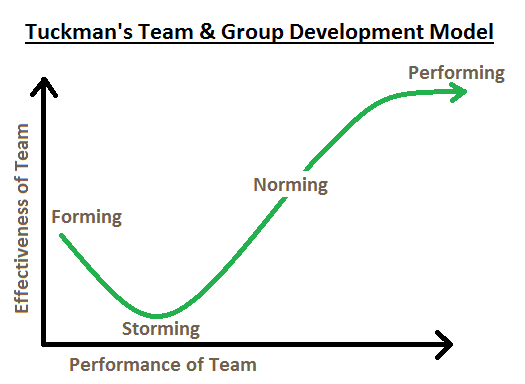
When considering Tuckman’s team and group development model (See Figure 1) I was able to recognize and distinguish the stages I went through during my first week. The forming and norming stages for me happened on my first day in the office with a team breakfast. This gave me the opportunity to get to know my team members in a slightly less formal manner over breakfast, talking about our personal and work lives and asking get to know me sort of questions. Through this I was able to learn names, personalities and job roles which immediately made me feel more comfortable and at ease having familiar faces I could go to if I needed help with something.  So far there has not been a storming stage which will hopefully continue. Therefore, I am currently going through the preforming stage where I am becoming more confident and independent with my team and everyday responsibilities.

This experience links to many of my personal learning contract goals such as building a network to aid me in my career and developing interpersonal skills to work as part of a team. These goals have been touched on by meeting and creating a connection to my team and being introduced to Northeastern’s goals as a business and not just our department or team.

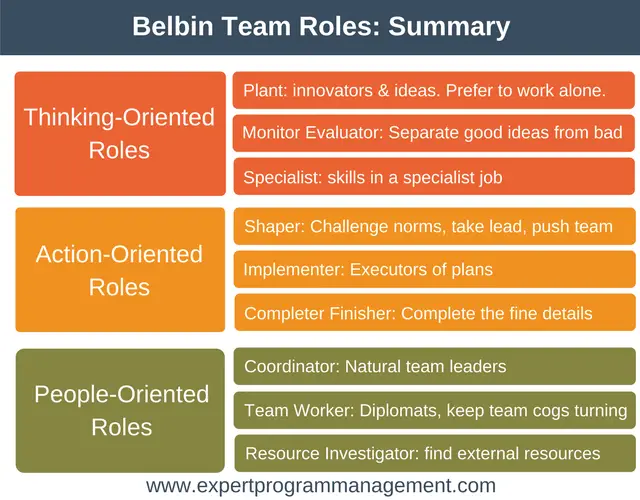
This week has taught me a lot and has changed my perspective on how a staff induction takes place. It is a carefully thought out process that has many small steps to introduce a team member successfully. Through learning about Belbin’s team roles (See Figure 2) and Tuckman’s team and group development model at university it is an eye opening experience seeing the theories in practice and the great complexity they entail to introduce a new team member and build on the team that already exists.

Image result for tuckman's team and group development model
Figure 1 – Tuckman’s Team & Group Development Model (Elsey, 2019)
Belbin Team Roles- Summary
Figure 2- Belbin Team Roles (Management, 2019)

References

Elsey, E. L. (2019, 7 23). Tuckman’s Team & Group Development Mode. Retrieved from The coatching tools company: https://www.thecoachingtoolscompany.com/get-your-team-performing-beautifully-with-this-powerful-group-development-model/

Management, E. P. (2019, 7 23). Belbin Team Roles. Retrieved from Expert programme management : https://expertprogrammanagement.com/2017/06/belbin-team-roles/Open publish panel

Design a site like this with WordPress.com
Get started